

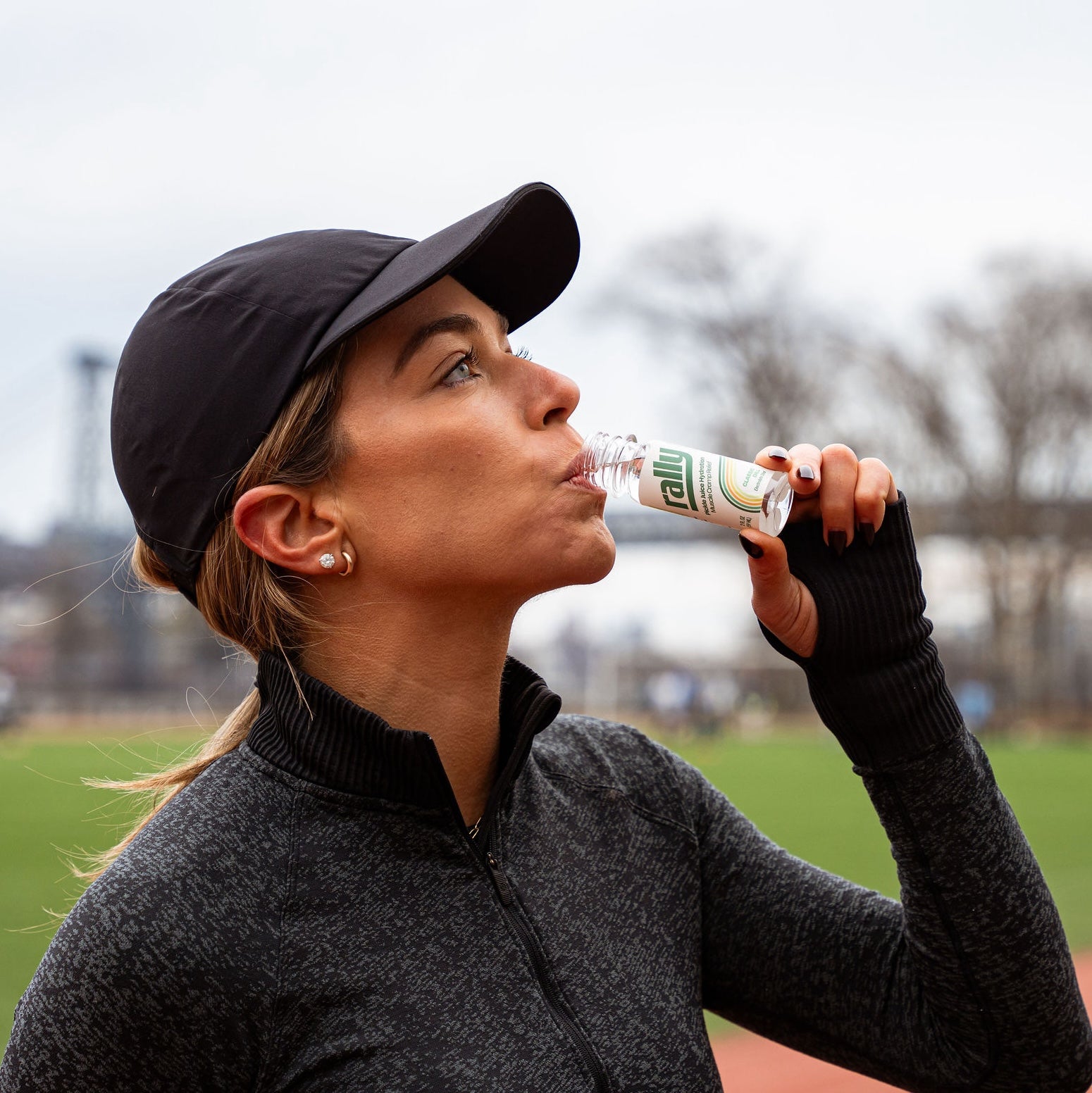
For an active muscle cramp, the relevant timing is when the cramp starts. Before exercise, pickle juice is not a proven guarantee against cramps. After exercise, an electrolyte shot can fit into your hydration plan alongside fluids and food.
The distinction matters: responding to a cramp and replacing sweat losses are different jobs.
By Brett Weisberg, Rally founder · Updated October 14, 2026
Pickle juice timing at a glance
| When | Where it fits | What to know |
|---|---|---|
| Before exercise | Try your planned serving during training to check tolerance. | Research on relieving an existing cramp does not establish a preventive schedule. |
| During a cramp | Stop or reduce your effort and gently stretch. Pickle juice may be an additional option. | Evidence suggests it can shorten some cramps; results are not guaranteed. |
| After exercise | Include electrolytes as appropriate for your sweat losses. | A small shot does not replace the water or food you need. |
Jump to: Before exercise · During a cramp · After exercise · How much? · Where Rally fits · FAQ
Before exercise: practice your plan
If you want to carry pickle juice on race day, try it during training first. Check how the taste, acidity, and serving size sit with you.
There is no established “take it 5–15 minutes before” rule from the cramp-relief research cited here. Taking a shot beforehand should not replace a sensible pacing, fueling, and hydration plan.
During a cramp: use it alongside the basics
If a muscle cramps, stop or reduce your effort and gently stretch the affected muscle. If you choose to use pickle juice, this is the situation most relevant to the acute-relief research.
In a small laboratory study, pickle juice shortened electrically induced cramps compared with water. The researchers proposed a nerve reflex originating in the mouth and throat because the response was too fast to be explained by electrolyte replacement. This was not a trial of Rally or naturally occurring race-day cramps. Read the study.
For the practical steps, see what to do when a cramp hits mid-workout. For more on the evidence, read does pickle juice help muscle cramps?
After exercise: account for fluids and food
After a sweaty workout, an electrolyte shot can contribute to your intake, but the volume still matters. Two ounces is a small amount of fluid. Keep drinking and eating according to your recovery needs rather than treating the shot as your entire hydration plan.
Our guide to sodium for runners explains why sweat losses vary.
How much pickle juice should you take?
Nebraska Medicine describes approximately 2–3 ounces as a typical amount used with athletes. That is practical guidance, not a universally proven dose for every person or product. Read its guidance.
For Rally, follow the product directions: one 2 oz bottle per serving. If needed, a second bottle can be taken later the same day; do not exceed three bottles in 24 hours. Rally is formulated for adults. Jar brine varies by recipe, so check its ingredients and sodium content rather than assuming it matches a packaged shot.
A measured shot you can carry
Rally combines vinegar with 400 mg sodium, 250 mg potassium, and 47 mg magnesium in a 2 oz bottle. It fits in a pocket and is ready to drink, with no powder mixing required.
Carry it for training or race day, and keep fluids and fuel in your plan. The convenience is having a measured serving within reach.
Common questions
Does pickle juice prevent cramps?
The research cited here supports possible relief of an existing cramp. It does not establish that a pre-workout shot reliably prevents cramps. Recurring cramps deserve a closer look at training, pacing, and other possible causes.
Is quick relief the same as rehydration?
No. Research testing small volumes of pickle juice found no rapid electrolyte or fluid changes that would explain immediate relief. A proposed nerve reflex and longer-term hydration are separate considerations. Read the electrolyte study.
Who should check with a clinician first?
If you have been told to limit sodium, check before using a salty shot. Acidic drinks may aggravate reflux. Get medical advice for frequent, severe, or unexplained cramps, especially with swelling, weakness, or numbness.


